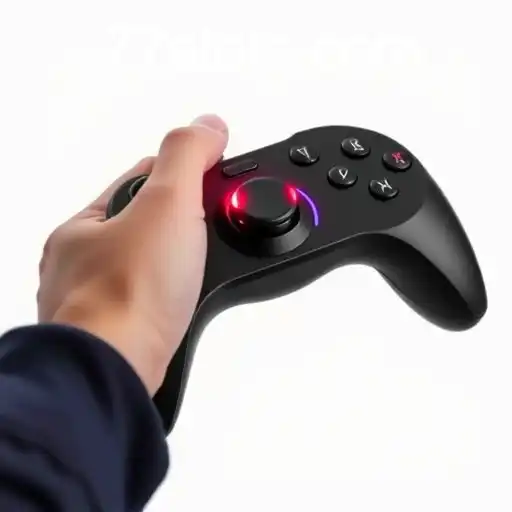
Exploring the World of Rotary Games: A Deep Dive into J77
In recent years, the gaming industry has seen unprecedented growth and transformation. Among these captivating developments is the emergence of rotary games, a segment that is rapidly gaining traction. Particularly, the keyword J77 has become synonymous with innovation and excitement in this niche. In this article, we will delve into the world of rotary games, focusing on what makes the J77 so special.
What are Rotary Games?
Rotary games are a unique subset of gaming that draws inspiration from traditional rotary mechanisms. Unlike standard video games that rely extensively on digital interfaces and joystick controls, rotary games blend physical engagement with digital technology. These games are designed to mimic the physical rotation mechanics that are reminiscent of devices like knobs, wheels, or dials.
One of the defining features of rotary games is their interactivity that relies on rotational motion. This dynamic interaction provides a novel experience for players, merging tactile satisfaction with digital gameplay. The J77 stands out as a particularly compelling application of this concept.
The J77 Experience
The term J77 references a revolutionary mechanism within the rotary games segment. At its core, J77 incorporates advanced rotary controls that enhance player immersion and improve the overall gaming experience. These controls utilize sensors to track the velocity and direction of rotation, allowing for precise input and nuanced interactions within the game.
Design and Functionality
The design of the J77 is sophisticated, boasting sleek ergonomics that ensure comfort and ease of use. It's engineered to cater to both novice and seasoned gamers, offering a customizable interface that adapts to individual play styles. Functionality is a key component of J77, as it supports a wide range of game genres including racing, puzzle-solving, and even educational simulations.
Another critical aspect of the J77 is its commitment to accessibility. Its user-friendly design ensures that individuals with varying levels of experience can partake in the gaming fun without barriers. The adaptive design also makes it a favorite among gamers with physical disabilities, as it reduces reliance on more traditional forms of control input.
Immersive Gameplay
The J77 provides an immersive gaming experience that is unparalleled in the rotary games space. This level of immersion is achieved through a combination of responsive controls and rich feedback mechanisms. When players engage with J77, they are greeted with immediate tactile and auditory feedback, creating a sense of realism and depth that draws them deeply into the virtual world.
Due to its highly adaptive mechanics, J77 is used in diverse gaming applications. For example, in flight simulation games, the rotary mechanism mimics the control of an aircraft, providing a realistic simulation experience. In puzzle games, the rotary component can be used to manipulate in-game items with precision, offering new challenges and strategies for players to explore.
The Impact of J77 on the Gaming Industry
The advent of the J77 has significantly impacted the gaming industry by setting new standards for interaction and engagement. Developers have been inspired to incorporate similar rotary mechanisms in their games, spurring innovation and diversity in game design. As more titles adopt these controls, the boundary between traditional video gaming and augmented reality continues to blur.
Beyond its impact on entertainment, J77 has also found applications in education and professional training environments. The interactive rotary mechanism enhances learning experiences by improving the engagement level and aiding in skill acquisition. For instance, simulations that incorporate the J77 have been used in sectors such as aviation training and medical education, providing learners with realistic scenarios to practice their skills safely and efficiently.
The Future of Rotary Games: A Focus on J77
As technology continues to evolve, the potential for rotary games, especially those utilizing the J77 mechanism, is vast. Gaming companies and tech innovators are investing in research and development to further enhance the capabilities of these unique devices, exploring possibilities in virtual reality (VR) and augmented reality (AR).
With the rise of VR and AR, rotary games are positioned to become even more immersive. Imagine a future where the J77 integrates seamlessly with VR headsets, allowing players to physically interact with 3D environments in unprecedented ways. This convergence of technologies promises to deliver experiences that are both captivating and instructive.
Conclusion
Rotary games and the J77 mechanism represent a fascinating frontier in the world of gaming. Their ability to blend physical interaction with digital gameplay opens up numerous opportunities for innovation and engagement. As we look to the future, the ongoing developments in this field are bound to redefine how we perceive and interact with digital worlds.